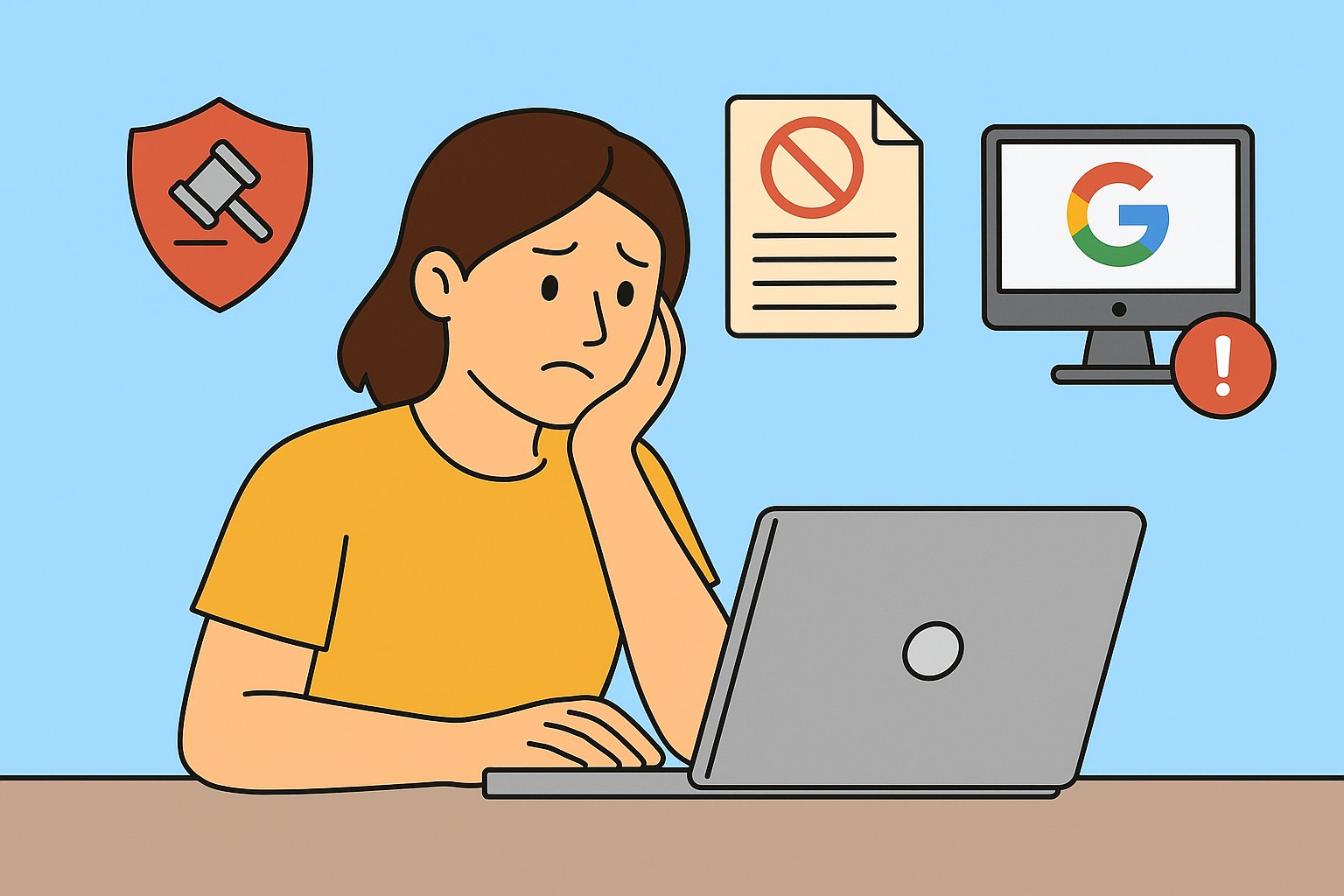
Every business owner eventually faces this question. Can Google reviews be removed. Some ask it out of frustration after receiving an unfair negative review. Others ask because they’ve had fake reviews posted by competitors or angry ex-employees. And some ask because they’ve tried questionable shortcuts in the past and watched their reviews vanish overnight. After spending years analysing review patterns, handling reputation crises and reviewing hundreds of Google Business Profiles across the UK, I’ve learned something important. Google reviews absolutely can be removed — but only under specific conditions, and only when they violate Google’s policies. The key is understanding exactly how the system works, what qualifies for removal, and how to avoid risky behaviours that trigger automatic filtering.
Google’s review ecosystem is built on trust. That means Google aggressively filters out anything it considers suspicious, fake or policy violating. But it also means genuine businesses sometimes lose real reviews accidentally. In this guide, I will break down everything you need to know about removing Google reviews. I’ll explain how Google’s removal system works, what triggers automatic deletion, how to request manual removal, and how BGR Review helps businesses manage review removal safely without violating guidelines. I’ll also reference internal resources like your in-depth breakdown on how Google detects fake reviews and your complete guide to handling negative reviews. I’ll also reference trusted external sources such as Google Business Profile Support, Search Engine Land and Search Engine Journal for accuracy and compliance.
Table of contents
- Can Google reviews be removed
- Why Google removes reviews automatically
- Which reviews qualify for removal under Google’s policies
- How Google detects fake, abusive or suspicious reviews
- How to request removal of a Google review manually
- Common mistakes that cause review removal
- Can real reviews be removed by mistake
- How to protect your legitimate reviews from being filtered
- How BGR Review helps remove harmful reviews safely
- Case study. Real review removal scenario
- FAQ
- Conclusion
Can Google reviews be removed
Yes. Google reviews can be removed, but only if they violate Google’s review policies. Google does not remove reviews simply because a business dislikes them or disagrees with them. Negative opinions alone are not enough for removal. Google only intervenes when the review falls under a policy violation such as spam, conflict of interest, harassment, deception or inauthentic behaviour. Reviews can also be removed automatically by Google’s algorithms when suspicious patterns are detected. This includes fake reviews, coordinated review drops or multiple reviews coming from the same IP or device cluster.
It’s important to understand that Google’s review system is automated first and manual second. The majority of removals happen algorithmically, behind the scenes. Your internal article on how Google detects fake reviews outlines how advanced Google’s detection models have become. They can recognise unnatural behaviour faster than any business owner can. However, legitimate businesses do have the right to report and dispute problematic reviews that clearly violate policy.
Why Google removes reviews automatically
Automatic removal is the most common type of review removal. Google’s review filters work continuously, not just once. This means a review that appears today could disappear tomorrow if the algorithm later detects suspicious behaviour. Google automatically removes reviews for reasons such as. Reviewer account looks fake or new. IP address overlaps with suspicious activities. Review content matches known spam patterns. Reviewer has no history of real-world activity. Review was posted too quickly after similar reviews. Review was part of a coordinated drop. The review includes promotional content or external links. These automated removals are not reversible. If Google removes a review algorithmically, the system has flagged it as untrustworthy.
Many businesses panic when real reviews disappear. But this usually happens when the review was posted in a way that accidentally triggered Google’s filters. For example, multiple customers leaving reviews while connected to the business WiFi. Your guide on how to get Google reviews safely explains how to avoid these technical pitfalls.
Which reviews qualify for removal under Google’s policies
Google has strict guidelines regarding what can and cannot be removed. According to the official documentation at Google Business Profile Support, the following review types qualify for removal if reported.
Spam or fake content
Reviews posted with deceptive intent, promotional content or from accounts used exclusively for promotion or manipulation.
Conflicts of interest
Reviews left by employees, family members, or anyone with a vested interest in influencing your business rating.
Harassment or hateful content
Reviews containing abusive language, personal attacks or discriminatory remarks.
Irrelevant or off topic content
Reviews that do not reflect the customer’s real experience. For example, political statements or unrelated complaints.
Misinformation
Reviews that mention events that never happened, or make claims that directly contradict verifiable facts.
Illegal content
Reviews that include threats, blackmail or attempts to extort a business by demanding refunds in exchange for removing a negative review.
These categories are the basis for manual removal requests. If a negative review falls into one of these categories, businesses can file a dispute through the Google support system.
How Google detects fake, abusive or suspicious reviews
Google’s review detection system is more sophisticated than most people realise. Many business owners assume Google manually reads each review. In reality, Google uses machine learning models, behavioural analysis, NLP scanning and device-level tracking. The system evaluates patterns such as. Language similarity. Shared device fingerprints. IP overlap between multiple reviewers. Reviewer’s historical location data. Posting frequency and timing clusters. Review velocity spikes. Search Engine Land and Search Engine Journal have both published in depth analyses confirming how crucial behavioural signals are in Google’s review moderation.
For example, if ten reviews appear within fifteen minutes of each other, but the business normally receives one review every few days, Google immediately flags them. If several reviews come from accounts with no real activity history, Google flags them. If the location history of the reviewer shows they were never near the business, Google flags them. Understanding this system is essential if you want to maintain a strong and stable review profile.
How to request removal of a Google review manually
Businesses can submit removal requests through Google Business Profile. Here is the process.
Step 1. Open your Google Business Profile dashboard
Search your business name while logged into the account that manages your listing.
Step 2. Go to Reviews
Find the review you want to dispute.
Step 3. Select Report Review
Choose the relevant violation category. For example. Spam. Conflict of interest. Harassment. Off-topic.
Step 4. Wait for Google’s review
Google’s team will examine the review manually. They may remove it if it clearly violates policy.
If Google denies the request but the review still violates guidelines, you can escalate via Google support. If the review contains serious legal issues such as threats or extortion, businesses can submit additional documentation. Your article on review removal and negative reviews explains how to build stronger evidence for disputes.
Common mistakes that cause review removal
Many businesses unintentionally trigger review removals. These behaviours often get flagged by Google’s algorithm even if the reviews are genuine.
Using the same device to collect reviews
If multiple customers leave reviews from the same phone or tablet, Google perceives them as suspicious.
Customers posting while connected to the business WiFi
This causes IP clustering. Google assumes the reviews came from the business itself.
Sending review links to people who never used the business
This leads to low quality reviews and suspicious behaviour patterns.
Coaching customers on what to write
Repeated wording gets flagged as template behaviour.
Sudden review spikes
Even if reviews are real, velocity spikes trigger filters.
Your internal guide on authentic customer feedback explains how natural behaviour prevents these issues entirely.
Can real reviews be removed by mistake
Yes. Real reviews are removed all the time. This frustrates businesses, but it usually happens when the review resembles suspicious behaviour. For example. Customer used a new Google account. Customer lives far from the business. Customer used copy-paste wording. Customer posted while connected to public or business WiFi. Customer wrote the review at the exact same time as many others. The review may return later if Google re-evaluates it. But in many cases, the removal is permanent because the system marked it as risky.
How to protect your legitimate reviews from being filtered
There are several strategies businesses can use to protect legitimate reviews from accidental filtering. These include. Encouraging customers to use their own device and mobile data. Avoiding bulk requests. Asking customers at the right emotional moment. Encouraging authentic, natural language. Maintaining consistent review velocity. Not sending your review link to irrelevant recipients. These factors improve the trust signals in your review profile. Your guide on safe review acquisition explains these behaviours in more detail.
How BGR Review helps remove harmful reviews safely
BGR Review approaches review removal differently from typical agencies. They analyse the review for policy violations, evaluate the reviewer’s behavioural footprint and determine the correct removal strategy. They use methods that align fully with Google’s guidelines. They avoid spammy reporting patterns, fake flags or mass removal attempts. If a review violates policies, they help the business document the issue, submit evidence and escalate through the correct support channels. If a review does not qualify for removal, they help businesses respond professionally, recover reputation and strengthen overall sentiment.
BGR Review also prevents review removal by ensuring reviews are built with authenticity, real user behaviour and safe velocity. Their approach aligns perfectly with how Google evaluates reviews, which is why their clients experience stable, lasting review profiles.
Case study. Real review removal scenario
A medical clinic in London received a series of one-star reviews within two hours. None of the reviewers were actual patients. All had new Google accounts and similar writing styles. One mentioned political comments unrelated to the business. The clinic reported them, but Google initially denied removal. After a structured appeal supported by behavioural evidence, Google reviewed the case again. The reviews violated policies relating to spam, off-topic content and coordinated behaviour. All reviews were removed within five days. The clinic’s rating returned to normal.
Understanding Google’s policies and using proper escalation channels made all the difference.
FAQ
Can I remove a review just because it is negative
No. Negative opinions do not qualify for removal unless they violate policies.
Can competitors post fake reviews
They can try, but these reviews often get flagged automatically.
How long does Google take to remove a review
Usually between three and seven days, depending on manual review workload.
Can real customer reviews disappear
Yes, if they trigger Google’s spam filters.
Is it safe to buy reviews to replace negative ones
No. Fake reviews are removed quickly and can trigger penalties.
Can BGR Review help with disputes
Yes. They assist with compliant review removal and reputation strategies.
Conclusion
Google reviews can be removed — but only when they violate policies or trigger Google’s automated filters. Understanding how the system works is essential if you want to protect your reputation, recover from unfair attacks or prevent the accidental removal of legitimate reviews. Google’s algorithm evaluates behaviour, authenticity and user trust signals. Businesses must align with these signals rather than trying to manipulate them. When real customers leave genuine reviews, the profile stays strong. When fake or suspicious patterns appear, removals follow.
BGR Review helps businesses navigate this landscape safely. They offer compliant review removal strategies, protect businesses from reputation damage and guide them toward authentic, stable review growth. When you understand the rules and work with Google’s system instead of against it, your review profile becomes a powerful asset that drives ranking, trust and long term business success.